Trial data explainer
Retatrutide results: what the trials actually reported
Retatrutide produced the most striking weight-reduction data in the history of incretin research — but headlines flatten the details. This guide walks through the published Phase 2 numbers, the liver-fat sub-study, and what the Phase 3 TRIUMPH programme is measuring now.
The headline numbers
The Phase 2 trial (NEJM, June 2023) randomised 338 adults with obesity across placebo and four weekly dose arms for 48 weeks:
| Arm | Mean weight change | ≥15% weight loss |
|---|---|---|
| Placebo | −2.1% | 2% |
| 1 mg weekly | −8.7% | — |
| 4 mg weekly | −17.1% | ~57% |
| 8 mg weekly | −22.8% | ~75% |
| 12 mg weekly | −24.2% | 83% |
Three details the headlines miss
The curve hadn’t plateaued. At 48 weeks the higher-dose arms were still losing weight when the trial ended — unlike semaglutide and tirzepatide trials, where the curves flattened before the endpoint. Phase 3’s longer duration will show where it settles.
The liver-fat sub-study. Among participants with MRI-confirmed fatty liver disease, more than 80% in the higher-dose arms reached normal liver-fat content (<5%) by 48 weeks — data that spawned a dedicated Phase 3 metabolic-liver-disease programme.
Glycaemic findings. A parallel Phase 2 in type 2 diabetes reported HbA1c reductions up to ~2.2%, alongside the weight effects. The glucagon-receptor arm of its mechanism — the component semaglutide and tirzepatide lack — is associated in published research with increased energy expenditure, not just reduced intake.
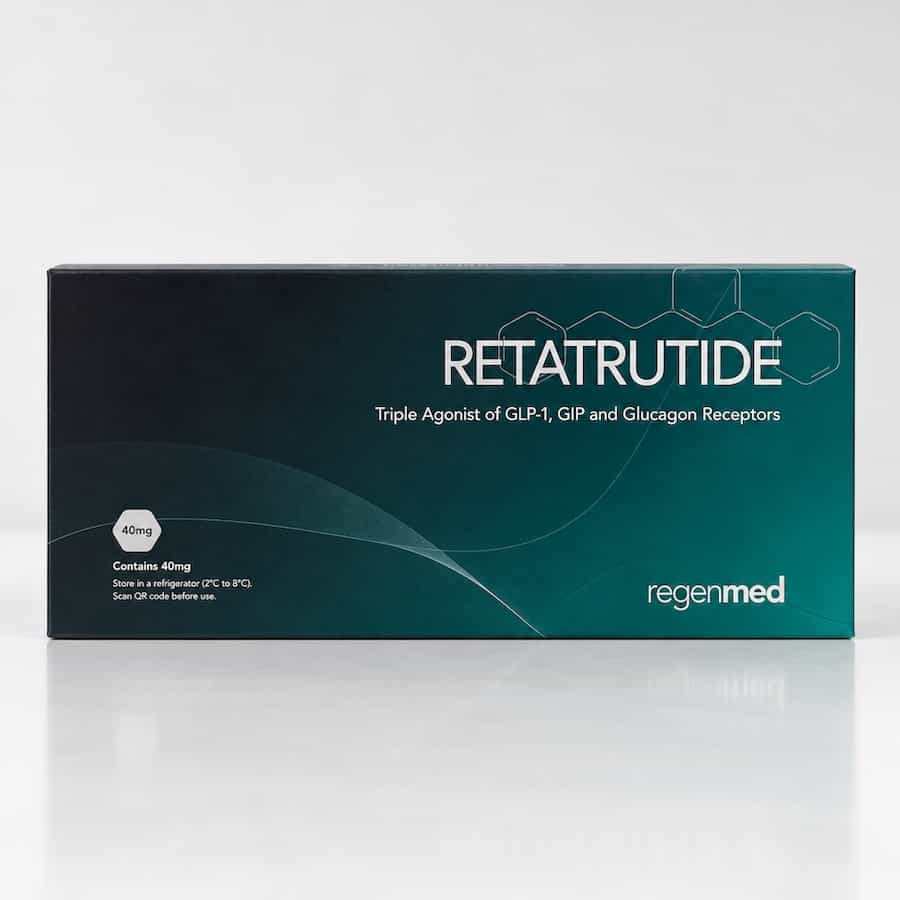
Research-grade retatrutide
For laboratory research use — third-party tested batch by batch, certificates of analysis available.
Frequently asked questions
What results did retatrutide show in trials?
What results did retatrutide show in trials?
How do retatrutide's results compare to semaglutide and tirzepatide?
How do retatrutide's results compare to semaglutide and tirzepatide?
Is retatrutide approved based on these results?
Is retatrutide approved based on these results?
What side effects were reported in the trials?
What side effects were reported in the trials?
Related reading
All products sold by RegenMed are supplied strictly for laboratory research purposes only and are not for human consumption. Nothing on this page is medical advice, and no statement has been evaluated by the MHRA or FDA. Content summarising published research is provided for educational purposes.